A Practical Review of the All-in-One Finance Budget Planner Canva Template
Effective personal finance management often hinges on a simple principle: visibility. Knowing exactly where money comes from and where it goes provides the clarity needed to make informed decisions. While spreadsheets offer a functional solution, many individuals prefer a more visual and organized approach. This is where a dedicated financial planning system, such as the Finance Budget Planner Canva Template, enters the conversation. It presents a structured, editable framework designed to centralize financial tracking, from daily expenses to long-term investment goals.
Understanding the Template's Core Purpose
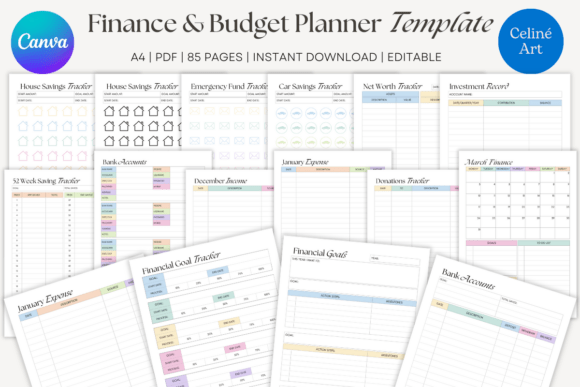
This particular Finance Budget Planner Canva Template is marketed as an all-in-one solution. Its primary function is to serve as a digital or printable binder, consolidating various financial tracking sheets into a single, cohesive document. The template is built within Canva, a widely accessible graphic design platform, which allows users to modify its appearance without specialized design software. The core value proposition is not just tracking numbers, but doing so within a system that is both aesthetically pleasing and functionally comprehensive.
Key Components and Their Practical Utility
The strength of a planner like this lies in its components. A well-designed system anticipates the multifaceted nature of personal finance. Typical inclusions, and their real-world applications, often include:
- Monthly Budget Planners (Jan–Dec): These provide a recurring framework for income and expense allocation. The monthly structure aligns with typical billing cycles and paycheck schedules, making it practical for routine planning.
- Debt and Savings Trackers: Dedicated pages for tracking debt repayment (e.g., snowball or avalanche methods) and savings challenges (like a 52-week plan) offer focused motivation. Seeing progress visually can be a powerful psychological tool for maintaining discipline.
- Bill and Subscription Logs: These sheets help users catalog recurring payments, reducing the risk of missed due dates and identifying potential subscriptions to cancel. This is particularly useful for managing the growing number of digital service subscriptions.
- Net Worth and Financial Goals Trackers: Moving beyond monthly cash flow, these pages encourage a broader view of financial health. Tracking net worth over time provides a high-level metric of progress, while goal-setting sheets help break down large objectives (like a down payment or retirement target) into actionable steps.
- Specialized Logs: Pages for holiday budgeting, gift planning, investment contributions, or even a checkbook register address specific, often overlooked, financial activities. Their inclusion adds depth to the planning process.
Evaluating Usability and Flexibility
The template's reliance on Canva is its most significant feature. For the intended audience—adults seeking a balance between structure and customization—this offers considerable advantages. Canva's interface is intuitive, and a free account is sufficient for most edits. Users can adjust colors to match a personal brand, change fonts for better readability, or modify layouts to suit their workflow. This level of customization is a notable strength over static PDF planners or rigid spreadsheet templates.
However, this flexibility comes with a consideration. Canva is a design tool, not a dedicated accounting application. While perfect for creating and organizing the planner, it lacks built-in formulas for automatic calculations. Users must manually total expenses, calculate remaining budgets, or update net worth figures. For some, this manual process enhances mindful spending. For others seeking automation, it may be a limitation. The template effectively serves as a beautifully formatted data entry system rather than an analytical engine.
Who Benefits Most from This Financial Planner Template?
This type of resource is particularly well-suited for several groups. Budget beginners will appreciate the guided structure, which outlines what to track and where, reducing the intimidation of starting from scratch. Visual learners and planners often find that a well-designed, physical (or digital) binder enhances engagement compared to a plain spreadsheet.
For freelancers, small business owners, and side hustlers, the ability to create separate sections or even duplicate the template for different financial streams (personal vs. business) can be valuable. The inclusion of pages for tracking business-related expenses or irregular income aligns with their needs.
Additionally, the template holds potential for creators and entrepreneurs in the digital product space. With its full editability, it can be customized, rebranded, and sold as part of a curated product line, provided the original license permits it. This creates an interesting secondary use case beyond personal finance management.
Practical Considerations and Long-Term Value
When evaluating a Finance Budget Planner Canva Template, it's wise to consider its role in a broader financial toolkit. It excels at organization, visualization, and habit formation. The act of manually updating a beautifully designed tracker can reinforce financial mindfulness. Its long-term value is sustained through consistent use; a planner is only as effective as the data put into it.
The quality of the design—consistent typography, logical layout, and clear sections—directly impacts usability. A well-constructed template minimizes friction, making the routine of financial planning less of a chore. The option to print it as a physical binder also appeals to those who prefer tactile interaction with their plans.
Ultimately, this Finance Budget Planner Canva Template is best viewed as an organizational and motivational framework. It provides the structure to systematically capture financial data and the flexibility to make that system personally relevant. It does not replace financial advice or sophisticated software for complex portfolio management, but for the core tasks of budgeting, tracking debt, saving for goals, and maintaining a monthly financial overview, it offers a cohesive and adaptable solution. For individuals who value design and customization in their planning tools, it represents a practical resource to bring order and intention to their financial journey.