ADHD Declutter Cleaning Blueprint: A Practical Guide for Building Functional Home Systems
Understanding the ADHD Declutter Cleaning Blueprint
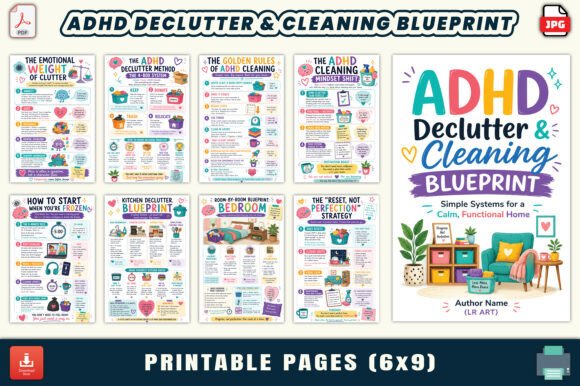
The ADHD Declutter Cleaning Blueprint is a digital resource designed to address the specific challenges individuals with ADHD and executive dysfunction face when managing household tasks. Unlike generic cleaning guides that rely on willpower and rigid schedules, this blueprint acknowledges the neurological factors that make traditional systems difficult to maintain. It provides a structured yet flexible framework that works with ADHD brains rather than against them.
At its core, the blueprint offers room-by-room cleaning strategies, dopamine-boosting techniques, and simplified routines that reduce decision fatigue. The guide includes printable checklists, a 7-day declutter challenge, and emotional clutter support—tools specifically curated to help users transition from feeling overwhelmed to creating sustainable order. The 30-page resource emphasizes practicality over perfection, focusing on functional systems that accommodate real-life variability.
Why This Approach Appeals to Neurodivergent Minds
Many people with ADHD struggle with cleaning and organization not due to laziness, but because of differences in executive functioning. Traditional cleaning advice often assumes neurotypical cognition—the ability to initiate tasks, maintain focus, and follow multi-step processes without significant internal resistance. The ADHD Declutter Cleaning Blueprint recognizes these barriers and offers solutions that address them directly.
Common reasons individuals seek this type of resource include:
- Task initiation difficulties—the struggle to start cleaning despite wanting a tidy space
- Overwhelm from clutter—feeling paralyzed by the sheer volume of possessions or mess
- Inconsistent motivation—experiencing bursts of energy followed by complete shutdown
- Shame cycles—feeling embarrassed about the state of their home, which further inhibits action
- Previous failures with systems—having tried and abandoned conventional cleaning routines
The blueprint addresses these issues by breaking tasks into manageable steps, incorporating reward mechanisms, and providing external structure through checklists and templates. For many users, having a pre-designed system eliminates the cognitive load of creating one from scratch.
Key Benefits and Practical Features
The ADHD Declutter Cleaning Blueprint offers several tangible benefits that distinguish it from standard cleaning advice:
- ADHD-specific design—The guide uses clear headings, visual breaks, and concise language that accommodates attention variability. The 6×9 inch page size and printable format allow for physical interaction, which can enhance engagement.
- Emotional clutter support—Unlike purely logistical guides, this blueprint acknowledges the emotional weight of possessions and mess, offering strategies for decision-making without guilt.
- Flexible routines—Daily and weekly reset routines are designed to be adaptable rather than rigid, recognizing that energy levels and time availability fluctuate.
- Dopamine-aware techniques—The cleaning hacks incorporate elements that provide immediate feedback or reward, helping sustain motivation through tasks that might otherwise feel unrewarding.
- Room-by-room guidance—Specific blueprints for different areas of the home prevent the "where do I even start?" paralysis common with ADHD.
These features collectively reduce the activation energy required to begin and complete cleaning tasks, making consistency more achievable without relying on unsustainable bursts of effort.
Considerations and Potential Limitations
While the ADHD Declutter Cleaning Blueprint addresses many common challenges, it's important to maintain realistic expectations about what any cleaning system can achieve:
- It requires engagement—The blueprint provides structure, but users must still implement the strategies. During periods of low motivation or high stress, even simplified systems may feel challenging.
- Individual variability—ADHD manifests differently across individuals. What works for one person's executive functioning profile may need modification for another's.
- Not a substitute for professional support—For individuals with severe executive dysfunction, hoarding tendencies, or co-occurring mental health conditions, this guide should complement rather than replace professional guidance.
- Initial setup time—While the systems are designed for sustainability, implementing them requires an initial investment of time and energy to customize for your specific living situation.
- Digital format limitations—Those who prefer physical books or struggle with digital organization may need to create their own printing system for the PDF files.
The guide's effectiveness depends significantly on the user's willingness to experiment, adapt, and show self-compassion during the implementation process. It offers tools, not magic solutions.
Is This Blueprint Right for Your Situation?
The ADHD Declutter Cleaning Blueprint may be a strong fit if you:
- Have tried conventional cleaning methods and found them unsustainable
- Experience executive dysfunction that makes task initiation and completion difficult
- Prefer visual, checklist-based systems over lengthy textual instructions
- Want strategies that account for emotional aspects of clutter and organization
- Seek a starting point that you can customize rather than a one-size-fits-all approach
Alternatively, you might consider other approaches if:
- You have significant physical limitations that require adaptive cleaning techniques not covered in the guide
- Your clutter challenges stem primarily from insufficient storage space rather than organizational systems
- You prefer working with a professional organizer who can provide hands-on, personalized guidance
- You're looking for deep psychological work on attachment to possessions, which may require therapeutic support
Making an Informed Decision
When evaluating whether the ADHD Declutter Cleaning Blueprint aligns with your goals, consider your specific pain points and previous experiences with cleaning systems. The guide's strength lies in its ADHD-informed design and practical, low-barrier entry points. It's particularly valuable for those who benefit from external structure but need it delivered in a way that respects neurological differences.
Before committing, you might ask yourself:
- Do I respond well to checklists and visual systems?
- Am I looking for permission to approach cleaning differently than neurotypical standards suggest?
- Would breaking tasks into smaller, dopamine-friendly steps help me overcome initiation barriers?
- Do I need strategies for managing the emotional weight of decluttering?
Ultimately, the most effective cleaning system is one you'll actually use. The ADHD Declutter Cleaning Blueprint offers a thoughtfully designed framework that many neurodivergent individuals find more accessible than traditional approaches. However, its value depends on your willingness to engage with the material, adapt it to your circumstances, and practice self-compassion throughout the process. For those seeking structured yet flexible support in creating a functional home environment, it represents a practical tool worth considering within the broader context of your organizational needs and personal challenges.