Strategically Deploying Whimsical Halloween Little Boy Clipart for Tangible Results
Beyond Decoration: Understanding the Asset's Strategic Value
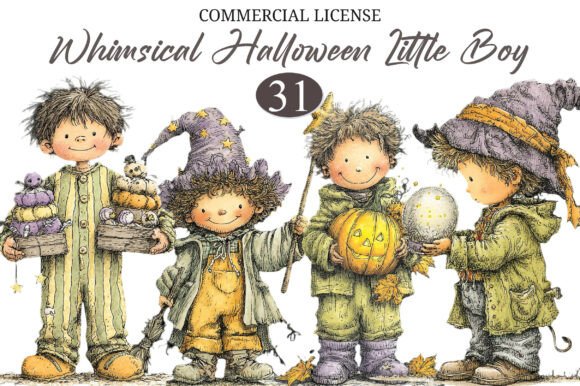
In the world of seasonal marketing and product creation, generic assets often fail to make a lasting impact. The Whimsical Halloween Little Boy Clipart collection, comprising 31 distinct designs, represents more than just festive imagery; it is a modular toolkit for creators aiming to capture a specific market segment. Unlike standard, often sterile vector art, the "whimsical" nature of these designs appeals to a demographic seeking nostalgia, charm, and a softer approach to the Halloween season. For the entrepreneur or educator, recognizing this aesthetic distinction is the first step in strategic positioning. The 300 DPI resolution and 12x12 inch dimensions ensure that this asset is not merely for digital thumbnails but is a production-ready resource for high-fidelity physical goods.
Technical Specifications as a Business Enabler
The utility of any digital asset is governed by its technical limitations. The specifications of this Whimsical Halloween Little Boy Clipart pack are engineered for versatility. The transparent PNG format eliminates the labor-intensive process of background removal, allowing for immediate integration into complex compositions. More importantly, the 300 DPI resolution is the industry standard for professional print. This means a small business owner does not need to worry about pixelation when scaling these designs for large wall art or detailed sublimation projects. By providing a high-resolution foundation, the asset reduces the friction between concept and execution, allowing you to focus on design strategy rather than technical troubleshooting.
Aligning Aesthetics with Audience Psychology
When selecting visual elements for a campaign or product line, decision-making should be driven by audience analysis rather than personal preference. The imagery of a little boy in a Halloween context triggers specific psychological responses. It evokes innocence, childhood wonder, and the playful side of the holiday, steering clear of the gore or extreme horror that limits market appeal. For a small business owner selling t-shirts or mugs, this "whimsical" approach broadens the potential customer base to include parents, grandparents, and gift-givers who prefer family-friendly aesthetics.
Consider the educator or school administrator. Using Whimsical Halloween Little Boy Clipart in classroom templates or party decorations creates an inclusive atmosphere that is festive without being frightening. For the digital marketer, these images offer a break from the saturated market of skulls and pumpkins, providing a unique visual hook that can increase engagement rates. The strategic takeaway here is that visual tone dictates market reach; choosing whimsy over horror is a deliberate choice to prioritize broad appeal and emotional warmth over niche shock value.
Operational Efficiency and Workflow Integration
For freelancers and creators, time is a non-renewable resource. One of the most significant advantages of this clipart pack is the operational efficiency it provides. Because the files are packaged in a .zip and organized for immediate use, they slot directly into existing design workflows in software like Adobe Illustrator, Photoshop, or Canva. This eliminates the "cold start" problem where creators spend hours sourcing and editing assets before actual design work begins.
Furthermore, the license to "Print Them As Many Times As You Like" is a critical factor for scalability. A boutique owner selling sublimation products does not need to track usage limits or pay royalties per unit. This allows for predictable cost modeling. When you can produce an unlimited run of stickers or frame artwork from a single purchase, the Return on Investment (ROI) calculations become significantly more favorable. It transforms the clipart from a one-time expense into a recurring revenue asset.
Practical Application: From Digital File to Physical Product
The transition from a digital file to a sellable product requires a clear plan. The Whimsical Halloween Little Boy Clipart is versatile enough to support multiple revenue streams simultaneously. Below is a strategic breakdown of how to leverage these 31 designs across different mediums:
- Apparel and Sublimation: Use the designs as central motifs for t-shirts. Because the background is transparent, the image can be placed over any color fabric. For sublimation mugs, consider isolating specific elements of the clipart (like a pumpkin or a hat) to create pattern-based designs that wrap around the vessel.
- Stationery and Invitations: Combine multiple designs to create layered scenes for birthday cards or Halloween party invitations. The whimsical style is particularly effective for "Not-So-Scary" party themes, which are trending in family-oriented markets.
- Wall Art and Home Decor: Given the high resolution, these images can be printed as large centerpieces or incorporated into rustic wood signs. Pairing the clipart with typography that says "Trick or Treat" or "Welcome" creates a complete product that feels cohesive and professional.
- Digital Assets: Use the clipart to enhance digital planners, blog headers, or social media graphics. Consistent use of the same character style across a brand's social media presence helps build visual identity and brand recognition during the holiday season.
Planning for Seasonal Timing
Strategic planning involves timing. The Halloween market is unique because consumer interest spikes and drops rapidly. To maximize the value of the Whimsical Halloween Little Boy Clipart, production should begin months in advance. Inventory for physical goods like mugs and stickers needs to be ready by early September. Digital marketers should begin teasing content in late August to capture early planners. By having a high-quality asset library ready, you avoid the rush and quality compromises that often happen in the final weeks before the holiday.
Risk Mitigation: Avoiding Generic Application
The primary risk in using clipart is the creation of generic, forgettable products. Simply pasting a Whimsical Halloween Little Boy onto a white background is unlikely to generate significant sales. The strategic approach involves context. The clipart should be treated as a component, not the entirety, of the design.
For example, if you are creating a sticker, consider adding depth with drop shadows, or framing the image with a vintage border. If you are designing a t-shirt, integrate the image with a specific font choice that matches the whimsical vibe—perhaps a handwritten script or a playful sans-serif. The goal is to use the clipart as a foundation upon which you build a unique brand voice. Without this layer of customization, products risk blending into the millions of other Halloween items available online.
Decision-Making Framework for Creators
Before committing to a production run, ask yourself the following questions to ensure the Whimsical Halloween Little Boy Clipart aligns with your goals:
- Does this aesthetic match my existing brand identity? If your brand is typically edgy or gothic, introducing a whimsical character might confuse your audience. However, it could also serve as a limited-time seasonal variation if introduced correctly.
- Who is the end-user? Identify if the buyer is a parent, a teacher, or a gift-giver. This determines your copywriting and marketing channels.
- How will I differentiate? Since other creators may purchase the same pack, your value-add must come from your layout, your color combinations, or your product type (e.g., combining the clipart with a specific crafting technique).
Long-Term Value and Repurposing
A common mistake in seasonal marketing is treating assets as disposable. The true value of a high-quality pack like this lies in repurposing. The Whimsical Halloween Little Boy Clipart can be adapted for "Harvest" or "Autumn" themes with minor adjustments. By desaturating the colors or focusing on non-Halloween specific elements (like pumpkins or fall leaves often included in such sets), you can extend the selling window from September through November.
Additionally, the elements can be broken down. A single character might be used for a main product, while a small icon from the same set can be used for a loyalty stamp or a digital watermark. This cohesive use of assets across different touchpoints—from the website banner to the thank-you card inserted in the package—elevates the perceived professionalism of a business. It signals to the customer that the creator is organized and deliberate, which builds trust and encourages repeat business.
Conclusion: Intentionality in Design
Ultimately, the Whimsical Halloween Little Boy Clipart is a tool. Like any tool, its effectiveness depends on the skill and intention of the user. For the entrepreneur, it is an opportunity to diversify product offerings with minimal design time. For the educator, it is a resource for creating engaging environments. By focusing on high-resolution production, audience psychology, and strategic differentiation, you can transform these 31 designs from simple images into drivers of engagement and revenue. The key is to move beyond random placement and toward intentional, audience-focused design that respects the quality of the asset and the needs of the market.