Understanding Rhinestone Design: A Practical Guide to Templates and File Formats
When considering decorative elements for custom apparel and merchandise, the term Rhinestone refers to a specific category of heat-applied embellishment. Unlike traditional ink printing or embroidery, rhinestones create a physical, textured surface that catches light, offering a distinct aesthetic. For crafters and small business owners looking to produce these designs efficiently, the use of Rhinestone templates has become a standard workflow. This approach allows for the creation of consistent patterns without manually placing each stone, bridging the gap between hand-crafted artistry and production speed.
A critical component of working with these embellishments is understanding the design files themselves. A high-quality Rhinestone template is not merely a flat image; it is a set of vector-based instructions that dictate the placement and density of the stones. This distinction is vital because the final product's quality depends entirely on the precision of these digital coordinates. When evaluating resources, it is essential to look for templates that provide comprehensive file formats to ensure compatibility with various cutting machines and design software.
Anatomy of a Professional Rhinestone Template Package
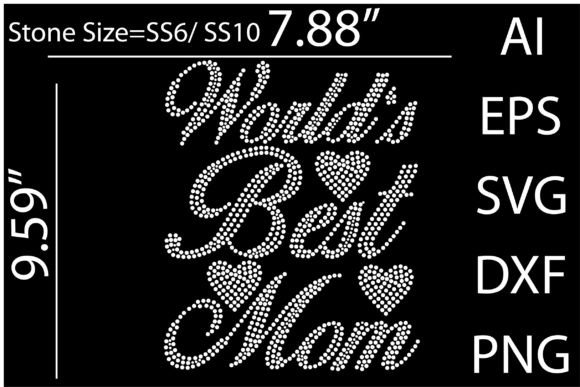
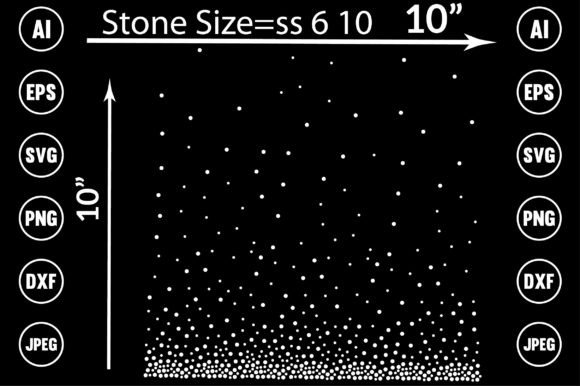
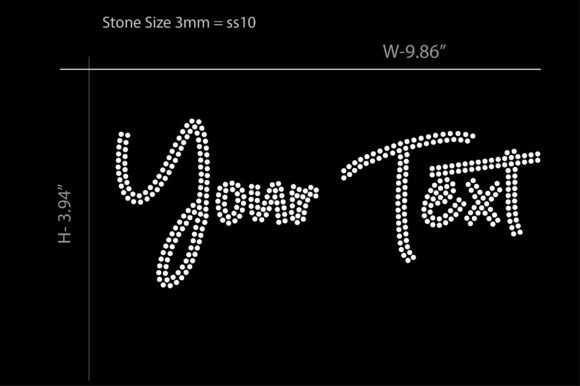
Not all design resources are created equal. A professional-grade Rhinestone template package is characterized by its versatility and technical specifications. For instance, a standard high-quality download, such as a design sized at W 10" x H 10" utilizing 3mm stones, is optimized for common production scales. The inclusion of multiple file formats is a key indicator of a robust resource. A comprehensive package typically includes vector files like AI, EPS, SVG, and DXF, which are essential for scalability and machine cutting. Additionally, raster files such as high-resolution PNGs (300ppi with transparency) and JPEGs (300dpi) are included for proofing, mockups, or use in print-on-demand workflows where vector manipulation is not required.
The choice of file format directly impacts the production process. Understanding the strengths of each format helps in selecting the right tool for the job.
- Vector Formats (AI, EPS, SVG, DXF): These are the workhorses for physical production. They define the Rhinestone placement as mathematical paths, allowing for resizing without loss of quality. The SVG and DXF formats are particularly important for users of home cutting machines, as they are widely supported by software like Cricut Design Space and Silhouette Studio.
- High-Resolution Rasters (PNG, JPEG): These are pixel-based images. A transparent PNG is invaluable for creating digital mockups on social media or for use in sublimation printing combined with heat transfer vinyl. However, they cannot be used to directly cut a stencil for the stones, as the data for individual point locations is lost in the pixel grid.
Comparing Rhinestone Templates to Alternative Embellishment Methods
When deciding on a project's finishing touch, it is helpful to compare Rhinestone designs against other popular methods. Each technique offers a different balance of cost, durability, visual impact, and production complexity.
Rhinestones vs. Embroidery
Embroidery offers a classic, textured look using thread. It is highly durable and perceived as a premium finish. However, embroidery can be costly for complex, multi-color designs and may not be suitable for very fine details. Rhinestone designs, by contrast, excel at creating bold, sparkling graphics that are difficult to replicate with thread. While embroidery integrates into the fabric, rhinestones sit on top, which can affect the garment's drape and feel. The production setup for rhinestones often involves creating a stencil, which can be more time-consuming for a one-off piece but highly efficient for a run of identical items.
Rhinestones vs. Heat Transfer Vinyl (HTV)
Heat transfer vinyl is a popular alternative for custom apparel. It involves cutting a design from a sheet of colored vinyl and heat-pressing it onto the fabric. HTV is excellent for solid colors and can achieve very clean lines. However, it lacks the dimensionality and light-reflective quality of a Rhinestone design. While HTV can be layered, it becomes thick and less flexible. Rhinestones maintain a consistent texture regardless of design complexity. From a cost perspective, HTV is generally less expensive per design, but the perceived value and "wow factor" of a sparkling rhinestone pattern can be significantly higher for certain markets, such as dancewear, cheerleading uniforms, or promotional merchandise.
Rhinestones vs. Direct-to-Garment (DTG) Printing
DTG printing is a digital method that applies ink directly to the fabric, similar to a paper printer. It is unparalleled for reproducing photographic images and intricate, full-color artwork with no hand-feel. For designs that require photographic realism, DTG is the clear choice. However, for designs that aim for a tactile, embellished effect, a Rhinestone template is superior. The decision often comes down to the design's intent: is the goal to display an image, or to add a decorative, physical element? Many creators combine techniques, using DTG for a base image and adding strategic Rhinestone accents for sparkle.
Practical Applications and Best-Fit Scenarios
The versatility of a well-designed Rhinestone template extends beyond t-shirts. Its suitability for a project depends on the substrate and the desired end use.
Ideal Applications:
- Apparel: T-shirts, hoodies, and denim jackets are classic canvases. The template's 10"x10" size is a common footprint for chest or back designs.
- Accessories: Tote bags, baseball caps, and shoes can be elevated with small, strategic rhinestone accents.
- Home Décor: Items like throw pillows, blankets, and even framed art can incorporate Rhinestone designs for a touch of glamour. The key is ensuring the fabric can withstand the heat-press application temperature.
- Drinkware: Ceramic mugs are a popular application. The template must be designed with the curved surface in mind, and the application process requires a mug press and careful temperature control.
Considerations and Limitations:
- Fabric Sensitivity: Delicate fabrics like silk or those with a low melting point may not be suitable for the heat and pressure required for application.
- Care Instructions: Garments with Rhinestone embellishments typically require gentle washing (inside-out, cold water) and should not be tumble-dried on high heat to preserve the adhesive bond and stone clarity.
- Production Scale: While templates streamline the process, the actual placement of stones—whether by hand with a stencil or with an automated machine—adds a production step. This makes rhinestones less ideal for on-demand, single-item fulfillment services compared to DTG printing, but excellent for batch production.
Making an Informed Decision
Choosing to use a Rhinestone design is ultimately a decision about aesthetic and tactile impact. It is the right choice when the goal is to create a product that stands out with dimension and sparkle, and when the production workflow can accommodate the additional steps of stone application. The availability of editable, multi-format template files is a significant advantage, as it provides the flexibility to adapt the design for different products and production methods.
Before committing, assess your primary use case. If you are creating prototypes or digital listings, the high-resolution PNG files will be your primary resource. If you are moving into physical production, you will rely on the vector formats (SVG, DXF, EPS) to create cutting files for your stencil material. The inclusion of the native AI file is a bonus for those using Adobe Illustrator for advanced editing.
In summary, a Rhinestone template is a specialized design asset. Its value is realized when matched with the right project, the appropriate production tools, and a clear understanding of the care requirements for the finished product. By evaluating the file package, comparing it to alternative embellishment methods, and honestly considering your production capabilities, you can determine if this sparkling technique is the right fit for your creative or commercial goals.